

At the 2026 EHS Seminar & Industry Tradeshow, several discussions reinforced how operational outcomes depend on more than procedures and technology. Even mature organizations may encounter challenges when teams make decisions under pressure, manage competing priorities, and coordinate across multiple systems in real time.
Constant exhibited at EHS and participated in conversations about process safety, operations, and environmental health and safety. One education session, “Human & Organizational Factors in Process Safety: Bridging the Gap Between Procedures and Real Work,” highlighted something that needs to be considered when designing mission-critical environments: a control room is more than a collection of systems; it is the space where operators monitor conditions, communicate across teams, and respond to developing situations. How a control room is designed directly impacts how effectively operators work in the space.
Human factors are central to the design conversation. A control room has to support the operators using it, especially with regards to how they:
- Maintain focus
- See information
- Hear information
- Move through the space
- Collaborate
The Gap Between Procedures and Real Work
In process safety, procedures form the foundation of the system. Their effectiveness depends on the conditions surrounding the work: the clarity of information, the pace of decision-making, the quality of communication, and the ability of teams to recognize when something is starting to move outside normal expectations.
Over time, pressure inside the operation creates space between the process as designed and the process as carried out. Those gaps may show up in small ways at first: a workaround that becomes routine, a handoff that depends on memory, an alarm that gets acknowledged without enough context, or a layout that makes coordination harder than it needs to be.
For control room design, that gap is an important planning consideration. The room should be shaped around the way work actually happens, including the pressures operators face during long shifts, abnormal conditions, and moments when several teams need to coordinate quickly.
Where Human Factors Show Up in the Control Room

The control room is where operational demands become visible. Operators monitor live conditions, interpret information from multiple systems, communicate with teams inside and outside the room, escalating concerns, and maintaining awareness over long periods of time. During an abnormal event, the pace of that work can change quickly.
The physical environment can either support that work or make it harder. Poor sightlines, unclear display hierarchy, excess noise, awkward room flow, uncomfortable furniture, or poorly planned collaboration areas all add small points of strain. Over a long shift, or during a critical event, those details impact how easily operators stay focused, communicate, and respond, which is why control room design is a key operational decision.
Designing Around How Work Actually Happens

Human factors need to be considered early in the control room design process, before layout, furniture, technology, and infrastructure decisions are finalized. Organizations should first define: how the room will be used, who will work in it, which systems will be monitored, and how teams communicate during both routine operations and critical events.
A control room designed for continuous monitoring will have very different requirements than one that also supports shift-change discussions, leadership briefings, incident coordination, stakeholder tours, or multiple teams working simultaneously. These requirements influence decisions about console placement, sightlines, collaboration areas, adjacent spaces, video wall location, technology access, and room layout.
At Constant, the discovery phase and early design planning are such important parts of the process. The team has to understand the mission, the physical space, the operational flow, the technology requirements, and the long-term needs of the organization before the design moves forward. When those considerations are addressed early, the finished control room is more likely to support the way operators already need to work, instead of asking them to adapt around decisions made too soon.olders.
Key Considerations in Control Room Design
Effective control room design is built around how operators work: what they see, what they hear, how easily they communicate, how comfortably they work, and how quickly they understand what needs attention. In a mission-critical control room , those details influence situational awareness, coordination, and response times throughout a shift.
Sightlines and shared visibility
Room layout, console placement, video wall placement, and display visibility all affect how easily operators monitor changing conditions. When sightlines are planned well, operators maintain awareness without constant repositioning or unnecessary physical strain. Shared displays also help supervisors and teams work from the same operational picture when several people need to understand a situation at the same time.
Room flow and coordination
Control rooms need to support collaboration while protecting the focus required for active monitoring. That may mean planning adjacent meeting areas, standing-height coordination spaces, supervisor positions, or briefing areas that allow teams to coordinate without disrupting active monitoring or pulling operators away from their primary responsibilities.
Noise hygiene
Sound has a direct effect on focus, communication, and comfort in a control room. Some noise is part of live operations, but audio needs to be planned with intention. Directional audio solutions, including sound showers, can help direct sound to a specific area instead of adding noise across the entire room.
That level of planning is especially useful when some operators need to hear specific information while others need to stay focused on different tasks. Good noise hygiene helps the room function without making the audio environment harder than it needs to be.
Ergonomics, movement, and operator comfort
In 24/7 operations, operators spend long periods of time at their workstations. During an active event, stepping away may not be realistic, so the workstation needs to support the operator throughout the work.
Sit-stand consoles give operators the ability to change position while maintaining sightlines to monitors and access to keyboards, controls, and other peripheral devices. Ergonomic planning also includes viewing angles, reach, storage, cable management, and the overall usability of the workstation. These details influence how workable the environment feels during a long shift.
Information hierarchy
Operators are responsible for monitoring information from multiple systems. Display planning should help them locate, interpret, and share critical information without adding unnecessary visual competition.
That includes thinking through what belongs on shared displays, what belongs at individual workstations, and how information should be organized when teams need to respond quickly. The goal is a room that supports attention, awareness, and coordination during both routine operations and abnormal conditions.
Supporting Operational Continuity Over Time
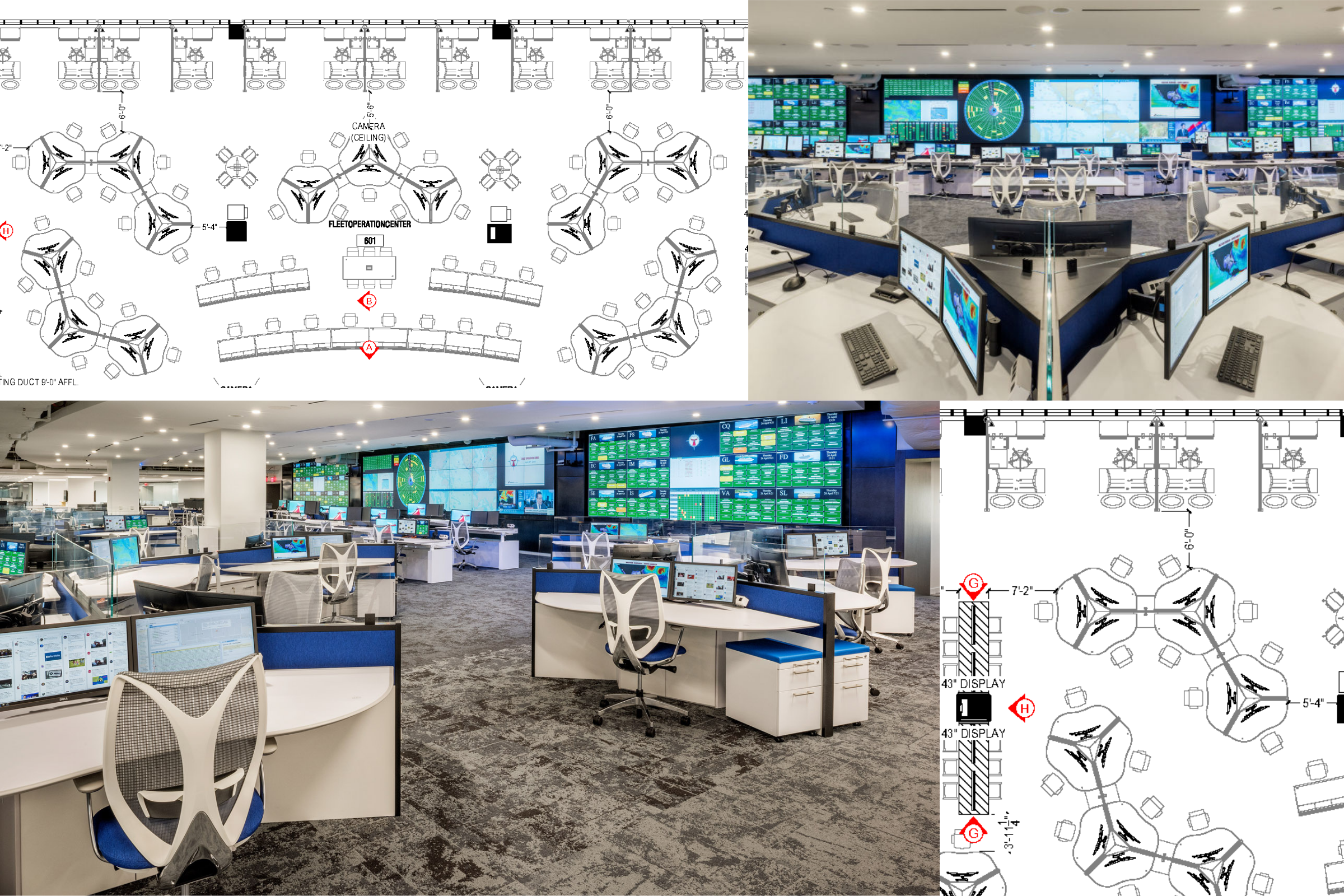
Over time, operational demands reveal whether a control room was designed around the work. If information is difficult to access, visibility is limited, or coordination activities compete with active monitoring, teams naturally develop informal processes to compensate. While these adjustments may keep operations moving, they create unnecessary dependencies on individual habits and manual communications.
Those adjustments may seem minor at first. In many cases, they are simply people doing what they need to do to keep the operation moving. But when the same workaround becomes part of the daily rhythm, it creates unnecessary dependence on memory, habit, and individual judgment.
That is why human factors need to be part of the design conversation early. The more clearly the team understands how operators communicate, hand off information, maintain awareness, escalate issues, and coordinate with others, the better the room supports those behaviors without forcing operators to compensate for the space.
A strong design gives the room a longer useful life. When workflow, communication, visibility, and future support are considered from the beginning, the space is better prepared to absorb operational changes without forcing a major redesign every time the work evolves. Adjustments may still be needed over time, but they are more likely to be manageable because the room was planned with operational efficiency in mind.
Control Room Design as Part of the Operating Environment
Human factors belong in the control room design conversation because the room is part of the operating environment. It shapes how operators see information, communicate across roles, maintain focus, and coordinate during routine operations as well as abnormal events.
Control room design supports the operators responsible for critical decisions. Visibility, communication, information access, and workspace functionality influence how effectively teams operate on a daily basis and during abnormal events. When these considerations are incorporated early in the planning process, organizations are better positioned to create a room that supports current operations and future needs.
At Constant, control room design is developed around the operator experience, workflow, mission requirements, technology, and long-term use. Those considerations belong at the beginning of the planning process because the room has to support the people working in it every day.
Ready to Plan a Control Room Around How Your Team Works?
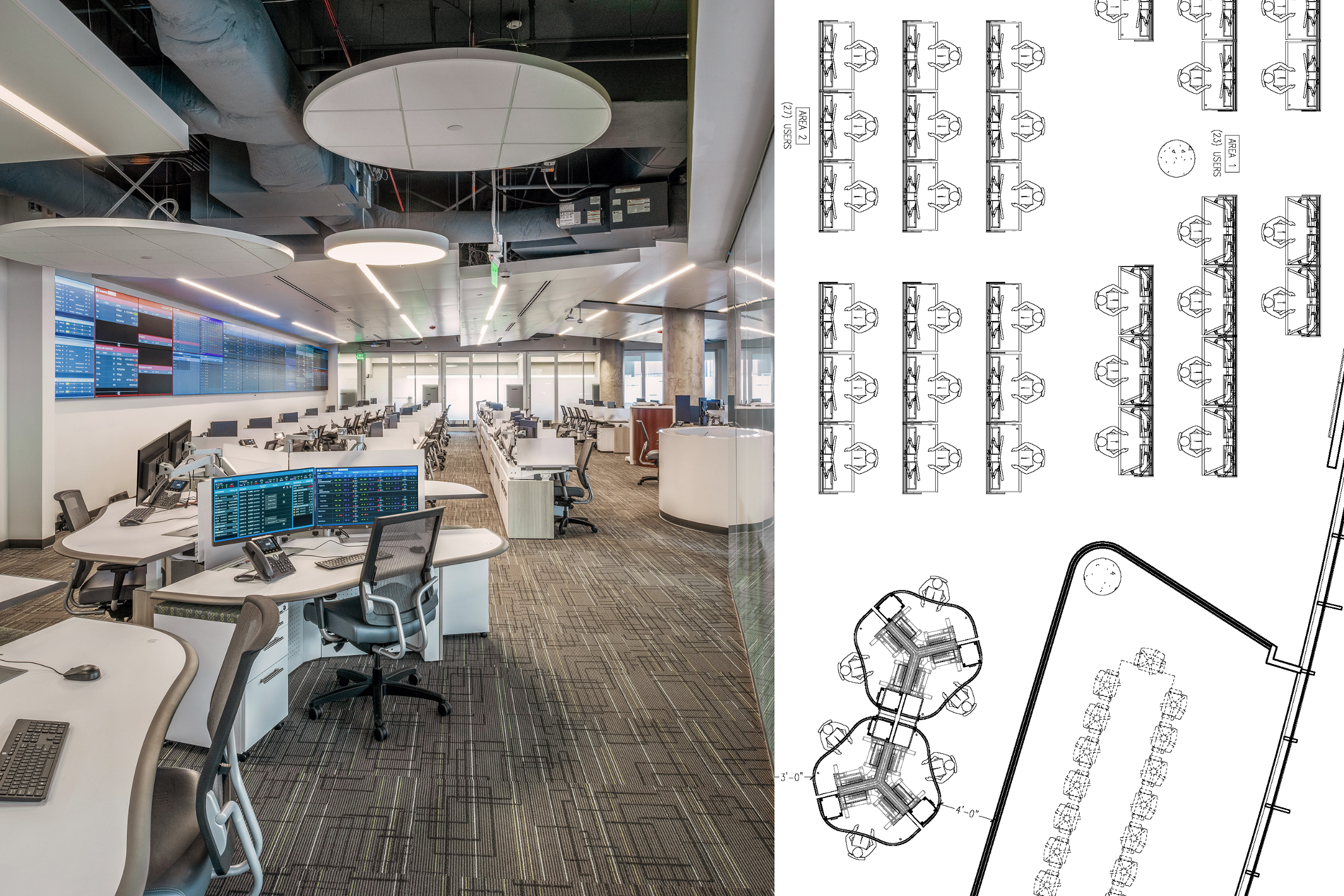
Constant designs, integrates, installs, and supports mission-critical control rooms for high-risk operations. Our team helps clients think through the human, operational, technical, and spatial decisions that support a control room’s long-term operational efficiency.
If your organization is planning a new control room or evaluating an existing space, contact Constant to request a no-cost design.


